 DGactual
When Your Car Loses Value But Your Tabs Don't: Minnesota's Quiet Registration Shock
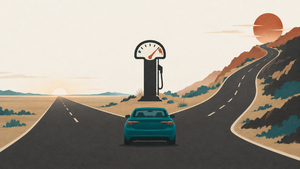
Minnesota is now the only Midwest state where your car can lose value but your tab bill can still feel like a second car payment. Here is how a 2023 policy change made that happen.
Minnesota is now the only place in the Midwest where your car can lose value but your tab bill can still feel like a second car payment.
That is not a metaphor. It is the direct result of a 2023 policy change that quietly rewired how the state taxes vehicles, just as new-car prices crossed the $50,000 mark and household budgets were already stretched thin.
This is not just "tabs went up a bit." It is a structural change that hits anyone driving a newer or higher-MSRP vehicle, year after year.
How Minnesota Turned Tabs Into a Second Payment
For years, Minnesota has taxed vehicles based on what they were worth when new, not what they are worth today. That is already different from flat-fee states. But the 2023 transportation bill pushed the system into new territory.
Under current law, the core registration tax works like this for most passenger vehicles:
- Take the vehicle's manufacturer's suggested retail price (MSRP).
- Multiply it by 1.575%.
- Apply a depreciation schedule that keeps the taxable value relatively high for the first 10 model years.
- After 10 model years, drop the tax to a flat $35.
On top of that tax, the Department of Public Safety adds a stack of smaller fees each time you renew:
- $8.00 filing fee
- $2.25 registration technology surcharge
- $15.50 for standard passenger plates (two plates)
- $10 to $20 county wheelage tax, depending on where you live
For a $45,000 vehicle registered in Hennepin County, a typical first-year bill looks roughly like this:
| Line item | Amount |
|---|---|
| Registration tax (1.575% of $45,000) | ~$709 |
| Filing fee | $8.00 |
| Tech surcharge | $2.25 |
| Plate fee | $15.50 |
| Wheelage tax (Hennepin) | up to $20 |
| Total | ~$755 |
The part that stings is what happens next. Because the depreciation schedule was flattened in 2023, that tax does not fall as quickly as the real-world value of the vehicle. Owners of late-model SUVs, trucks, and EVs are discovering that year-two tabs feel uncomfortably close to year one. In some cases, people have reported renewal quotes that were higher in year two than in year one on the same vehicle.
What Changed in 2023
To understand why, you have to look at the 2023 legislative session. As part of a broader transportation package, lawmakers set the registration tax rate for newer vehicles at 1.575% of MSRP and adjusted the depreciation schedule so high-value vehicles stay in the top bands longer. According to the Minnesota House's own fiscal analysis, those changes increased total registration tax revenue by roughly 22% compared to the prior structure.
In March 2026, a bill labeled HF3562 attempted to walk that back. It would have cut the rate from 1.575% down to 1.285% of MSRP for affected vehicles and restored a faster move down the depreciation tiers. The Legislative Budget Office estimated that this rollback would reduce state revenues by about $159 million in fiscal year 2027, and by more than $730 million over the next two-year budget cycle.
In the end, HF3562 failed on a tie vote in the House Transportation Finance and Policy Committee. The current rate and schedule stayed in place.
The reason is not complicated. Minnesota faces a projected $15 to $20 billion transportation funding gap between now and 2042. The higher tab formula is one of the levers lawmakers pulled to close that gap, alongside gas-tax indexing and other changes.
What is notable is that even supporters of the current system are not pretending drivers are happy. In the March hearing, the Democratic co-chair of the committee said bluntly:
"Tab fees are way too high. It's not what we would want it to be."
When the people defending the formula say that out loud, you know the public frustration is not imagined.
The View From the Driveway
For people who do not follow legislative hearings, this shows up as sticker shock.
One rural legislator who runs a small business shared his own numbers with the committee: "We have a small business, and I can tell you that our taxes on our vehicles have gone from about $5,000 a year to $8,000 a year. And these are not new vehicles by any means." That is a $3,000 annual jump just to keep a work fleet registered.
On the consumer side, local news has highlighted drivers opening renewal notices with $700 to $900 bills on late-model SUVs and trucks, and four-figure renewals on some higher-priced vehicles and EVs. In the old system, tabs were annoying. In the new system, anyone with a newer or more expensive vehicle has to treat them like a planned major expense.
The Worst Possible Moment to Raise Tabs
All of this would be controversial in a normal market. But this is not a normal market.
According to the latest Kelley Blue Book data, as of early 2026, the average new-vehicle transaction price in the U.S. sits at $49,275, up 3.5% year-over-year. The average MSRP has been above $50,000 for 12 straight months, reaching $51,456 in the most recent report. Minnesota's registration tax is tied directly to that number, MSRP, not to actual resale value or what a given household can afford. When MSRPs drift up, so do tabs.
On the credit side, the Federal Reserve Bank of New York reports that roughly 4.8% of all U.S. household debt was in some stage of delinquency at the end of 2025. Auto loan delinquency specifically sat just under 3% in the most recent quarter, while subprime borrowers took on more auto debt, with originations up over 12% year-over-year in late 2025.
Monthly payments are high. Prices are high. Riskier borrowers are stretching further. Minnesota chose this moment to lean harder on a value-based registration tax, effectively adding hundreds of dollars per year in non-negotiable costs, especially at the newer end of the market.
Why Minnesota Feels So Different From Its Neighbors
Plenty of states have vehicle taxes. What makes Minnesota stand out in the Midwest is how it taxes and how long it holds onto the original value of the car.
In broad strokes, neighboring states often use flat registration fees, weight-based tables, or a large tax at purchase (sales or excise) followed by lighter annual renewals.
Minnesota does this instead: taxes you every year based on what the car cost when it was brand new, applies a 1.575% rate to that original MSRP for newer registrations, and keeps the taxable value elevated until the vehicle crosses the 10-model-year threshold.
That is why a driver in Wisconsin with a $45,000 crossover might renew for under $100, while a driver in Minnesota with essentially the same vehicle is looking at a bill seven or eight times that amount. Same region. Same weather. Same commute. Completely different experience when the renewal arrives.
The Trade-Off: Roads vs. Affordability
If you strip out the talking points, the real conflict in Minnesota looks like this:
The state has a multi-billion-dollar infrastructure problem that will not fix itself. Lawmakers chose to make newer, higher-value vehicles pay more every year through a value-based registration tax. That decision delivered a 22% bump in tab revenue and helped close the funding gap. It also made car ownership noticeably less affordable for households that need or want newer vehicles.
There is no mystery villain here. It is a policy trade-off: favor stable revenue tied to vehicle value, or favor predictable, lower costs for drivers, especially those at the newer end of the market. Right now, Minnesota is firmly on the "stable revenue" side of that equation. The price is that thousands of drivers are opening their mail and discovering that the cost of owning a newer car in this state is higher than they thought, not just once at purchase, but every single year.
The One Line That Explains It
Minnesota is the only Midwest state where your car's value goes down but your tab bill can still feel like a second car payment, and lawmakers chose that moment just as new vehicles crossed $50,000 MSRP.
Everything else, the 1.575% rate, the flattened depreciation curve, the failed rollback bill, the $755 tab on a $45,000 car, are just the details of how we got there.
Daniel Govaer / EVP Product VINCUE / Loyalty Project Manager Beaver Toyota / Dealer Innovation Group Facilitator MyKaarma / Former Award Winning Mercedes-Benz General Manager / NADA Academy Class N367 Graduate